
Resource Consents
This page provides access to key resource consent documentation for Tāiko Critical Minerals’ projects. It includes formal consent decisions, conditions, and supporting technical reports prepared as part of the resource consent process. All documents are available to download below.
Barrytown Mineral Project – Resource Consents
Consent overview
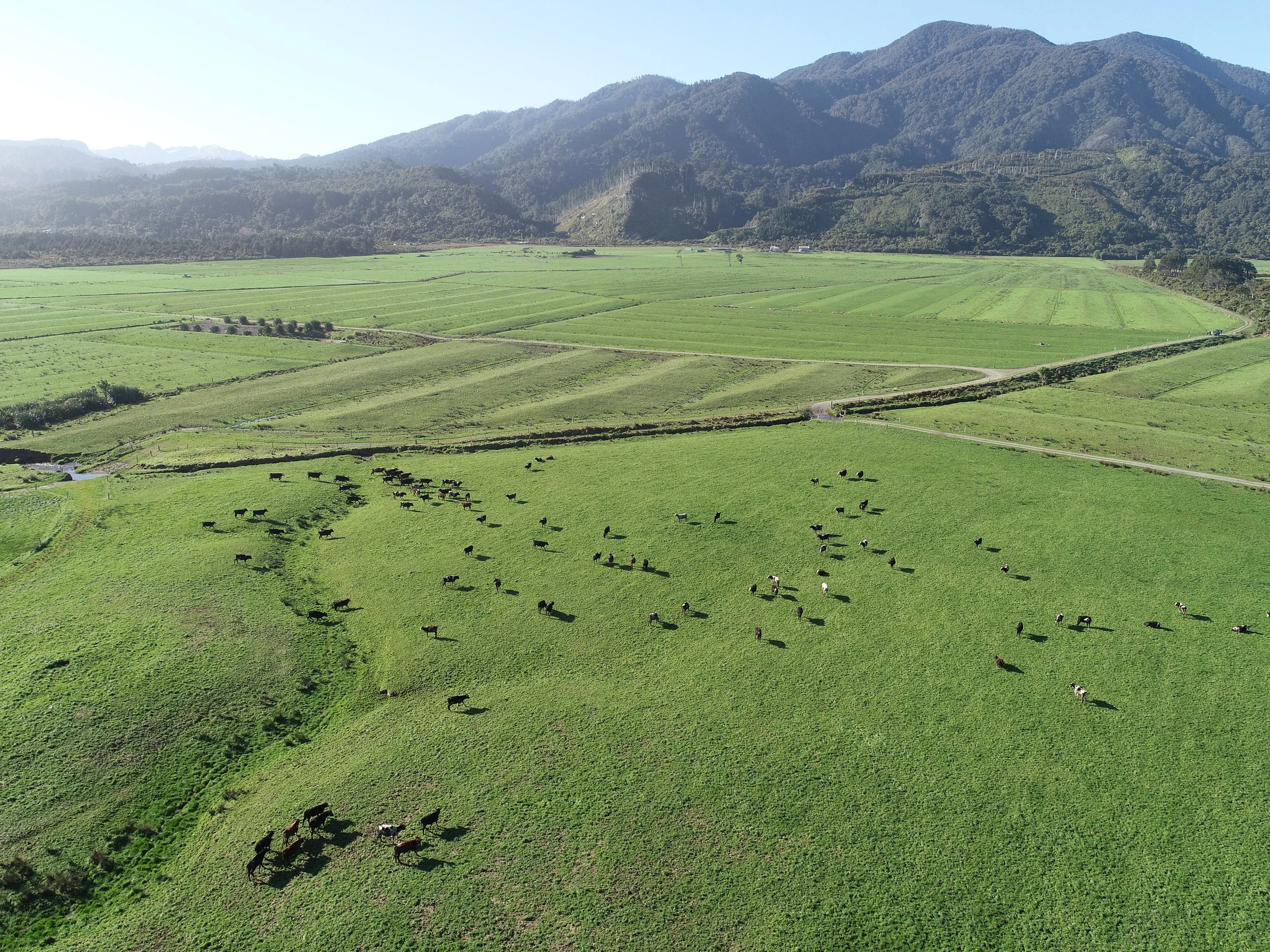
Tāiko Critical Minerals Limited applied for resource consent to mine and process minerals on private farmland located on the Barrytown Flats, West Coast, New Zealand.
The application was publicly notified by the West Coast Regional Council and Grey District Council, enabling interested parties to participate in the consent process. Technical, environmental, and planning assessments were prepared to support the application.
Following a public hearing, an independent panel of commissioners granted resource consent for the project, subject to a comprehensive set of conditions.
Consent status
Status: Consent was granted on 29 April 2024 following an independent hearing; appeal proceedings were resolved in October 2024.
Consent duration and scope
The Barrytown Mineral Project has been planned as a small, bespoke mining operation with a defined operating footprint.
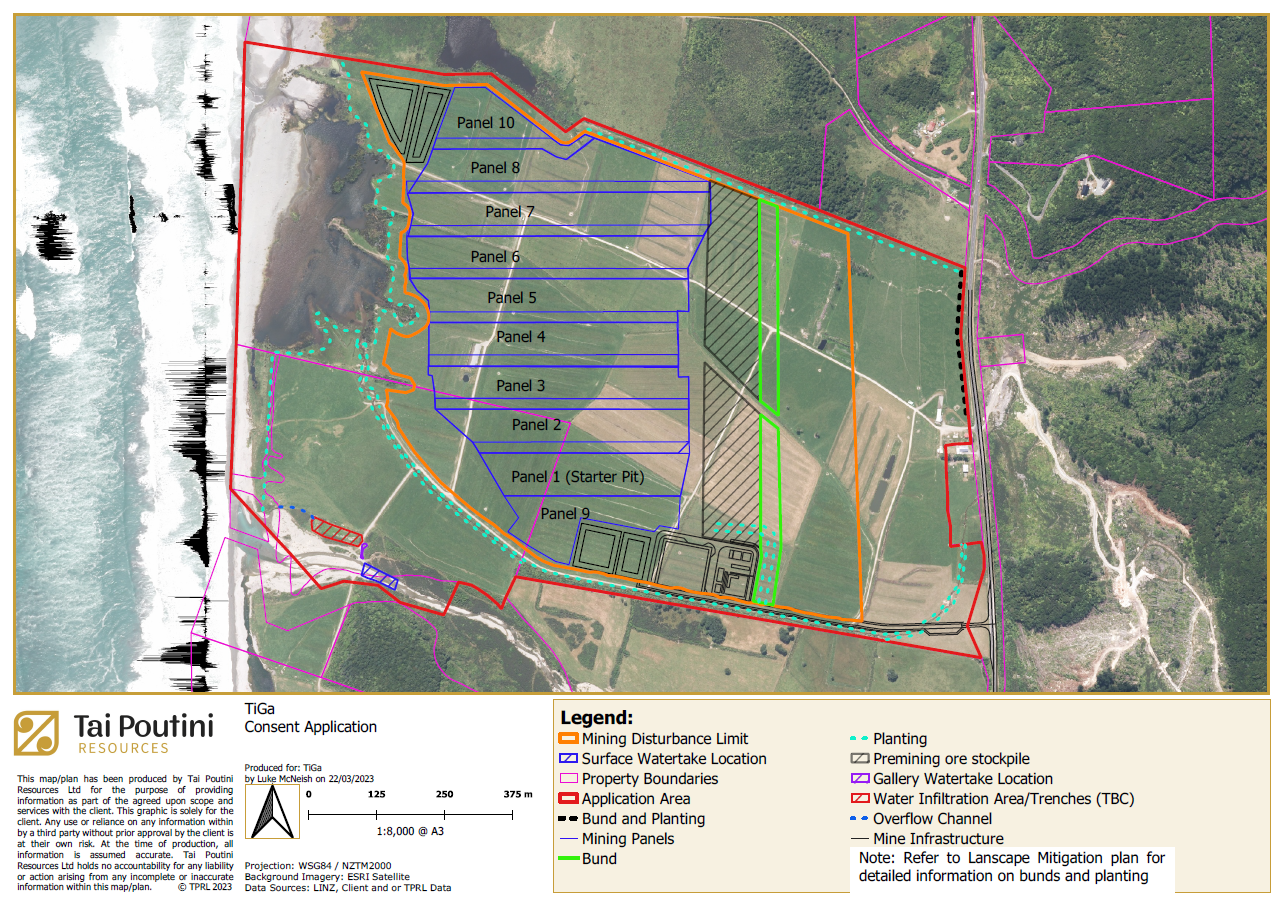
While consent has been sought for a 12-year period, the period of active mining is expected to be approximately five years. Mining activity would be limited to around five hectares at any one time, with progressive rehabilitation undertaken as mining advances.
The remaining consent period provides for site preparation, infrastructure development, decommissioning, final rehabilitation, and post-closure environmental monitoring in accordance with consent conditions.
Consent process and documentation
The following documents support the resource consent application and decision for the Barrytown Mineral Project. These materials include the commissioners’ decision, consent conditions, technical assessments, and supporting plans submitted as part of the application.

Hearing Commissioners’ Decision
Decision issued under the Resource Management Act 1991 granting resource consent for the Barrytown Mineral Project.
Appendix 1 – Consent Conditions
Final consent conditions issued by the hearing commissioners, setting out operational, environmental, and monitoring requirements.
Resource consent application and supporting documents
The following documents support the resource consent application and decision for the Barrytown Mineral Project. These materials include technical assessments, management plans, and supporting information lodged as part of the application.
TCM Resource Consent Application
Primary resource consent application document for the Barrytown Mineral Project.
Attachment A - Records of Title
An official record of the land ownership at the proposed mine site.
Attachment B - TCM Site Plan
Aerial photograph of the proposed mine site with site plan overlays.
Attachment C - Archaeological Site Records
Details of recorded archaeological sites within the project area.
Attachment D - Certificate of Compliance
Information confirming consent compliance of existing farm buildings on the site.
Attachment E - Mining Unit Plant Site Layout
Indicative layout of the mining unit and plant site.
Attachment F - Processing Plant Building Plans
Architectural plan of the proposed mineral processing plant.
Attachment G - Mine Transport Assessment
Assessment of transport effects associated with the proposal and compliance with district plan provisions.
Attachment H - Acoustic Assessment
Assessment of potential noise effects arising from the proposed mining activity.
Attachment H1 - Noise Management Plan
Management plan outlining procedures to avoid or minimise noise effects on neighbouring properties.
Attachment I - Hydrological Assessment
Assessment of potential hydrological effects and proposed water management systems.
Attachment I1 - Water Management Plan
Water management, monitoring, and mitigation plan to address hydrological effects.
Attachment J - Erosion and Sediment Control Plan
Plan outlining erosion and sediment control measures during construction and mining activities.
Attachment L - Fuel Tank Indicative Design
Indicative design for a 40,000L double skin fuel tank.
Attachment K - Dust Management Plan
Dust management, mitigation, and monitoring plan for the project.
Attachment M - Ecological Effects Assessment
Assessment of potential ecological effects prepared by terrestrial, freshwater, and environmental specialists.
Attachment M1 - Wetland and Riparian Plan
Wetland construction and riparian planting plan.
Attachment M2 - Avian Management Plan
Plan addressing potential effects on threatened and at-risk bird species, including the Taiko (Westland Petrel).
Attachment N - Landscape Assessment
Landscape and visual effects assessment, including mitigation and rehabilitation measures.
Attachment N1 - Landscape Graphic Supplement
Graphic supplement supporting the landscape and visual assessment.
Attachment O - Rehabilitation Management Plan
Plan outlining progressive and final rehabilitation of the site during and after mining.
Attachment P - Proposed Conditions of Consent
Recommended consent conditions prepared by TCM and its consultants.
Attachment Q - Compliance Assessment
Assessment of proposal compliance with relevant district and regional planning provisions.
Attachment R - Economic Assessment
Assessment of the economic effects associated with the Barrytown Mineral Project.
Attachment S - Geotechnical Assessment
Assessment of geotechnical considerations, including excavation stability and tailings management.
Attachment U - Radiation Dose Report
Assessment of potential radiation dose to workers and the public associated with the proposed mining activity.
Attachment T - Radiation Assessment
Assessment of radioactive elements associated with the proposed mining activity, including material processed on site and material returned to the ground following extraction.
Attachment V - Objectives and Policies Assessment
Assessment of consistency with objectives and policies in relevant district, regional, and national planning instruments.